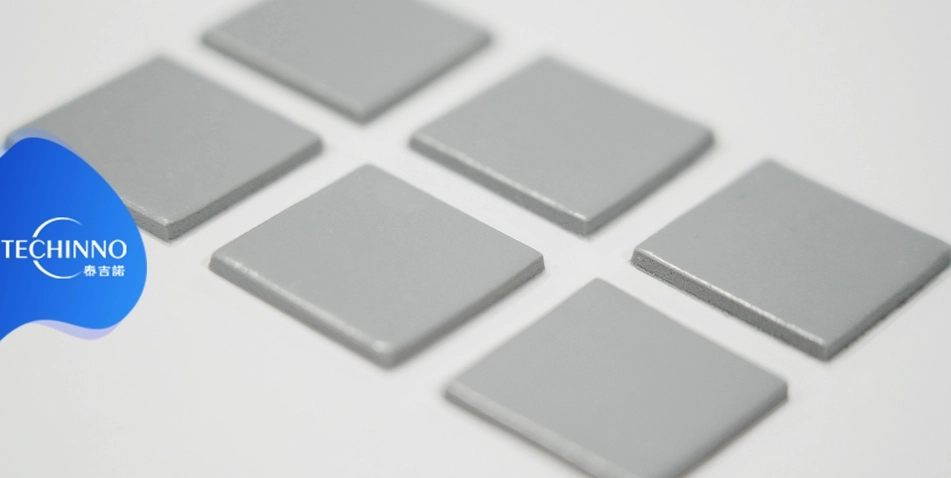
As AI accelerators and high-performance compute nodes continue to scale, data centers are entering an era of unprecedented power density. Dense arrays of CPUs, GPUs, and optical transceivers leave minimal clearance between components, creating three critical thermal challenges:
- Localized hot spotsfrom closely packed high-TDP chips, leading to frequency throttling and unexpected system shutdowns.
- High interfacial thermal resistancecaused by microscopic air gaps that impede heat flow across mating surfaces.
- Long-term reliability risks, where fragile solder joints and die surfaces demand low stress, contamination free materials that maintain performance under extreme temperature and humidity cycles.
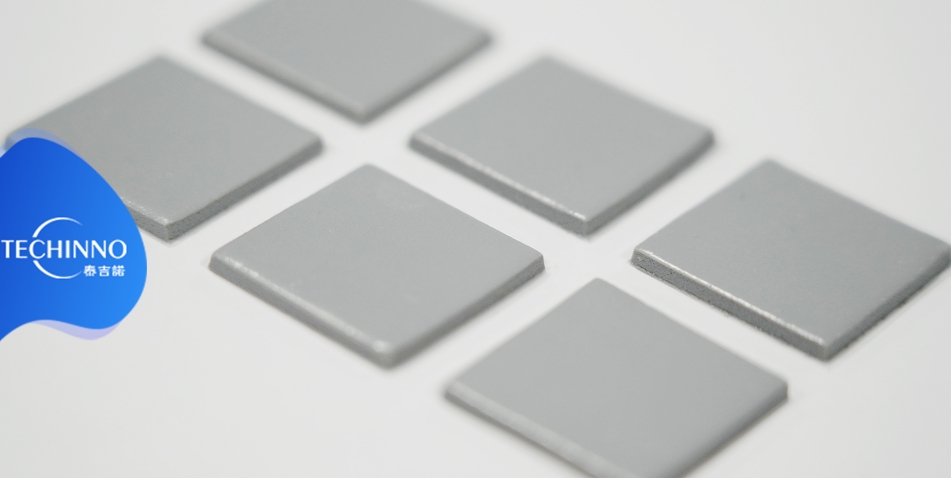
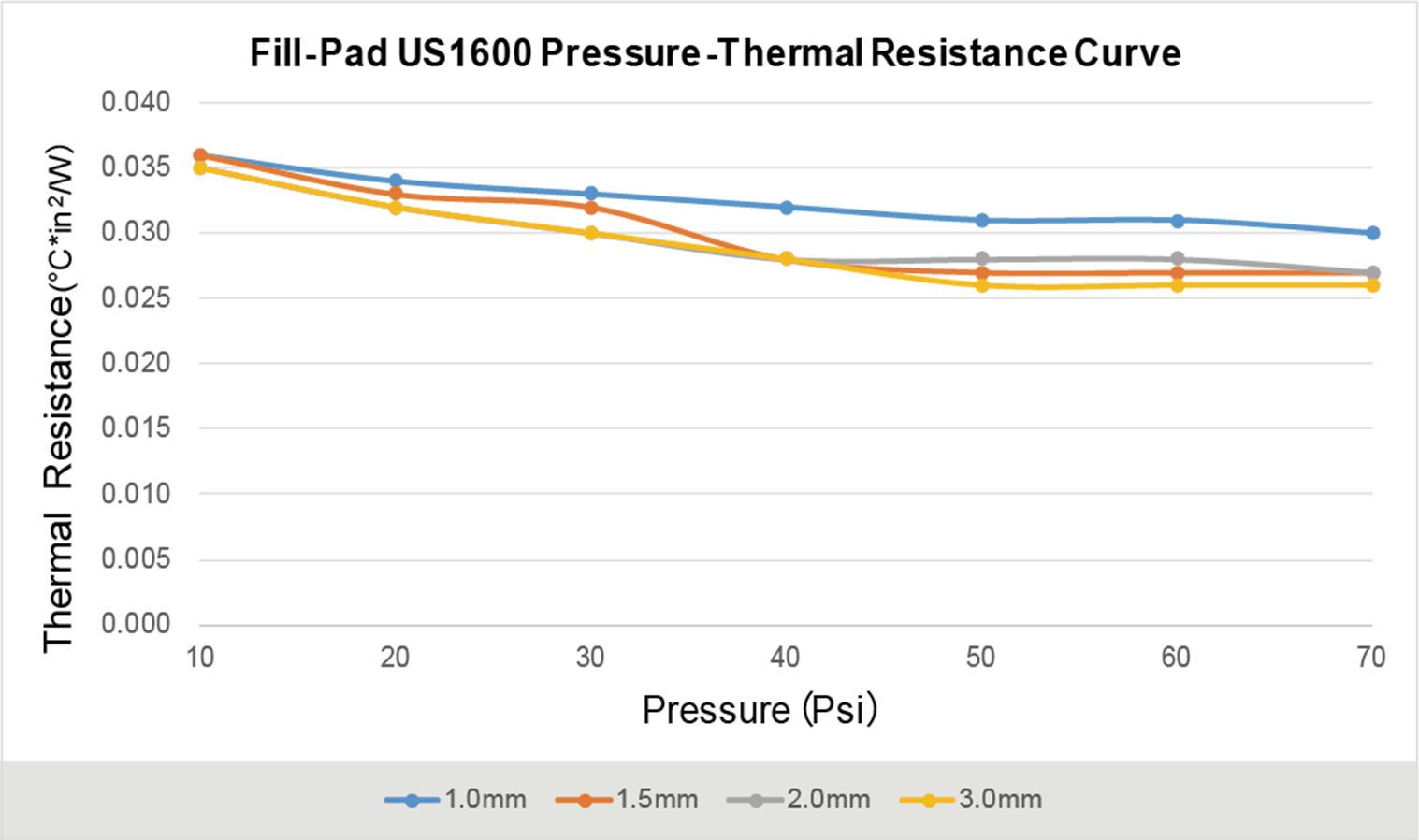
- 16 W/m·K Ultra High Thermal Conductivity
With a verified thermal conductivity of 16.0W/m·K, the US1600 is tailored for high heat flux applications common in AI inference and training racks. Its compressible construction allows increased assembly pressure to enhance surface contact, effectively reducing overall thermal resistance and boosting heat dissipation efficiency. The pad is offered in multiple thickness grades to accommodate a wide range of board level gap tolerances.
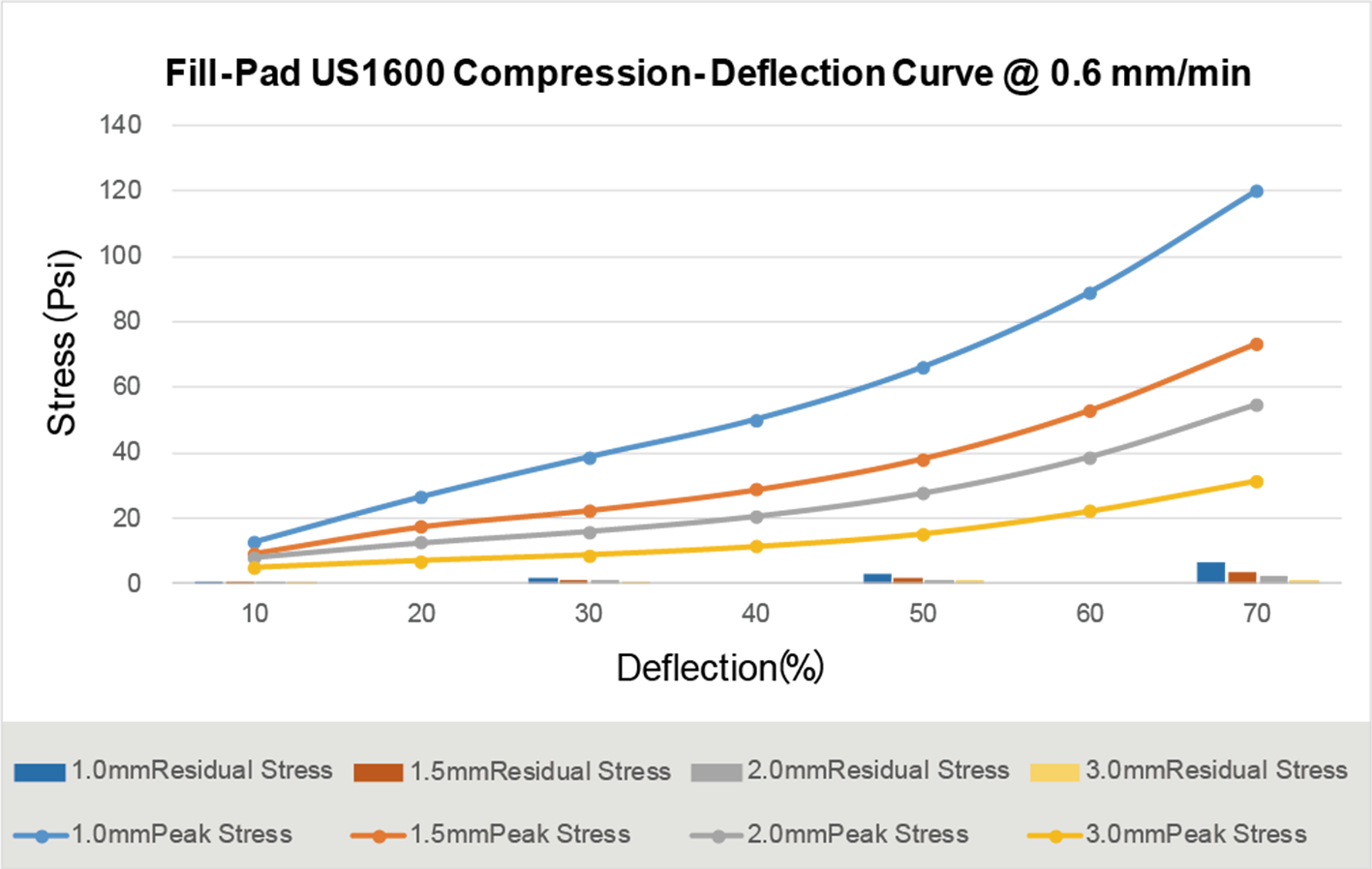
- Superior Surface Wetting & Low Stress Conformability
The ultra soft, compliant nature of Fill-Pad US1600 delivers excellent wettability, enabling intimate conformal contact with uneven component topographies and filling sub-micron air voids. This minimizes interfacial resistance while compensating for mechanical tolerances in stacked assemblies. The material provides an optimized residual stress profile – sufficient to maintain stable interfacial adhesion throughout the product lifecycle, yet gentle enough to prevent over compression damage to delicate substrates.
- 100% Silicone-Free Composition
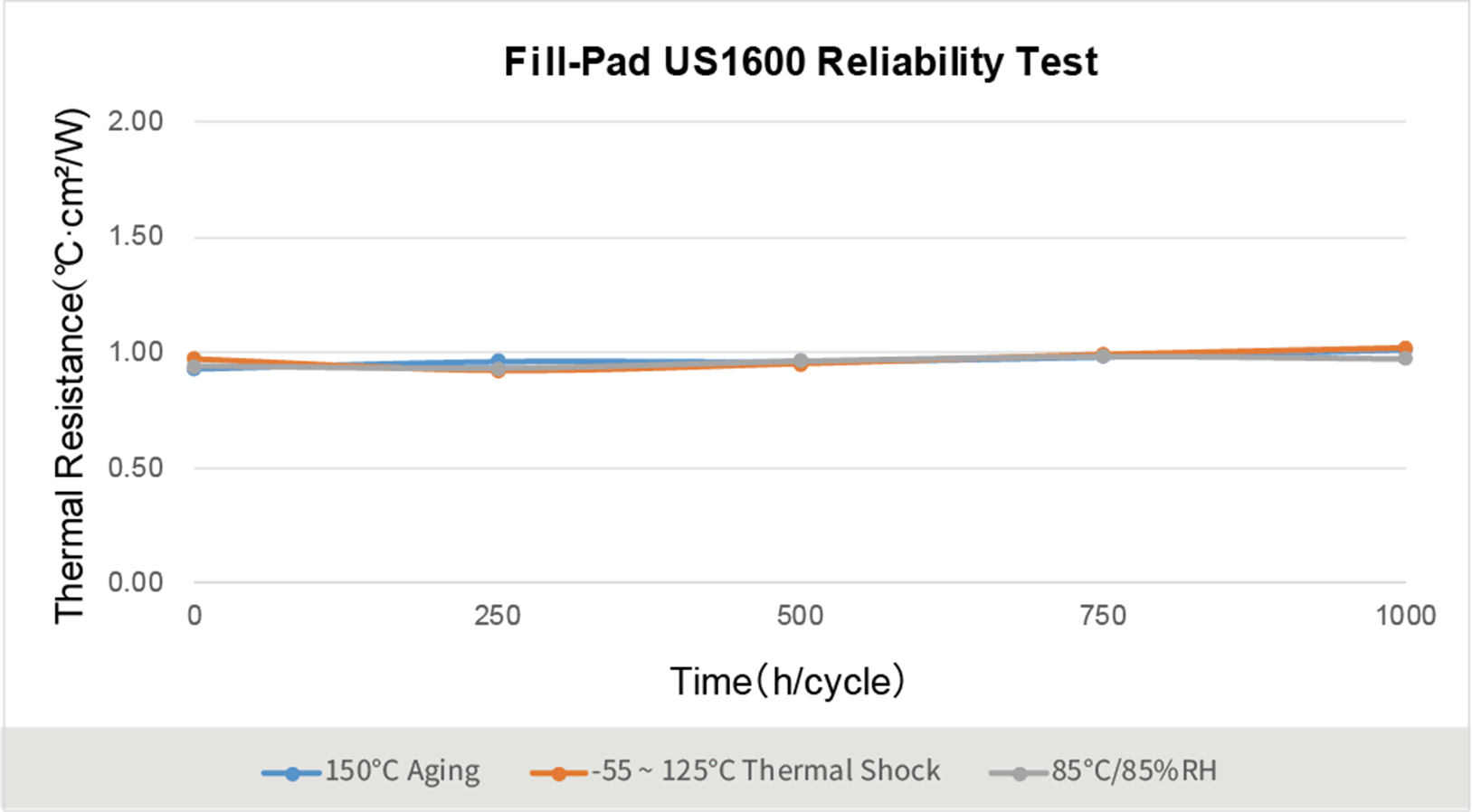
By eliminating silicone chemistry, the US1600 completely avoids siloxane outgassing and the associated risk of contamination in sensitive optical, connector, and MEMS assemblies. The pad’s thermal stability is validated through rigorous accelerated life tests:
- 150 °C aging
- –55 °C to +125 °C thermal shock
- 85 °C / 85 % RH HAST
Post test measurements confirm consistent thermal performance with no degradation in physical or mechanical properties, ensuring dependable operation in demanding data center environments.
If you are facing board-level heat dissipation bottlenecks in data center deployment, welcome to contact our team for sample evaluation and professional technical support.