
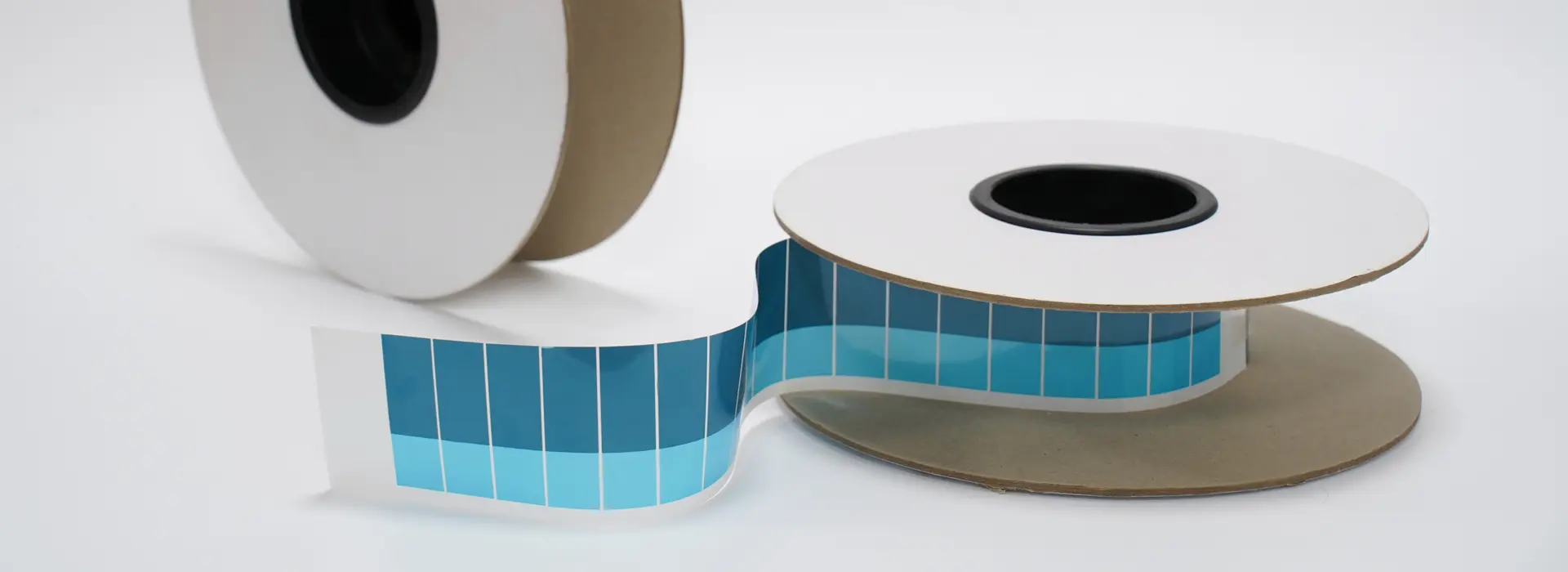
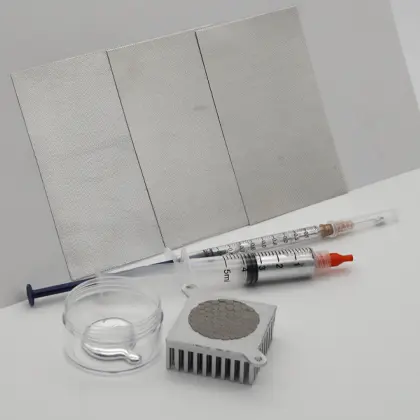
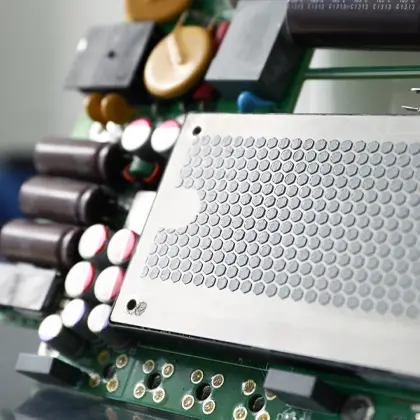
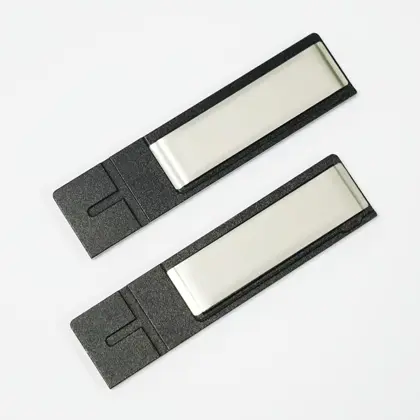
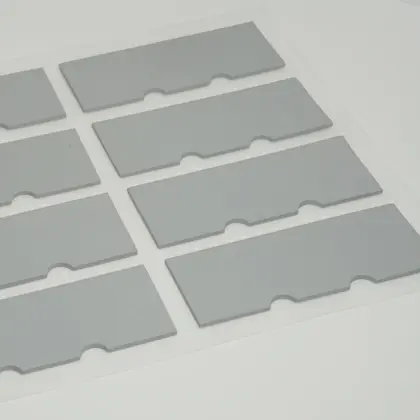
Thermally Conductive Phase Change Material is specifically developed to meet the demanding heat dissipation requirements of high-performance electronic products. It features low BLT, low thermal resistance, and high reliability. At room temperature, it is a solid sheet that is easy to cut and handle, making it convenient to attach onto heatsinks or chip surfaces. When the temperature rises above the phase change point, the PCM begins to soften and flow, allowing it to better fill microscopic gaps at the interface and greatly reduce interfacial thermal resistance. While minimizing interfacial thermal resistance, it ensures excellent long-term stability under various harsh operating conditions, reduces the risks of pump-out and dry-out, and achieves high reliability, making PCM an ideal choice for high-performance integrated circuit devices.
PCM General Series
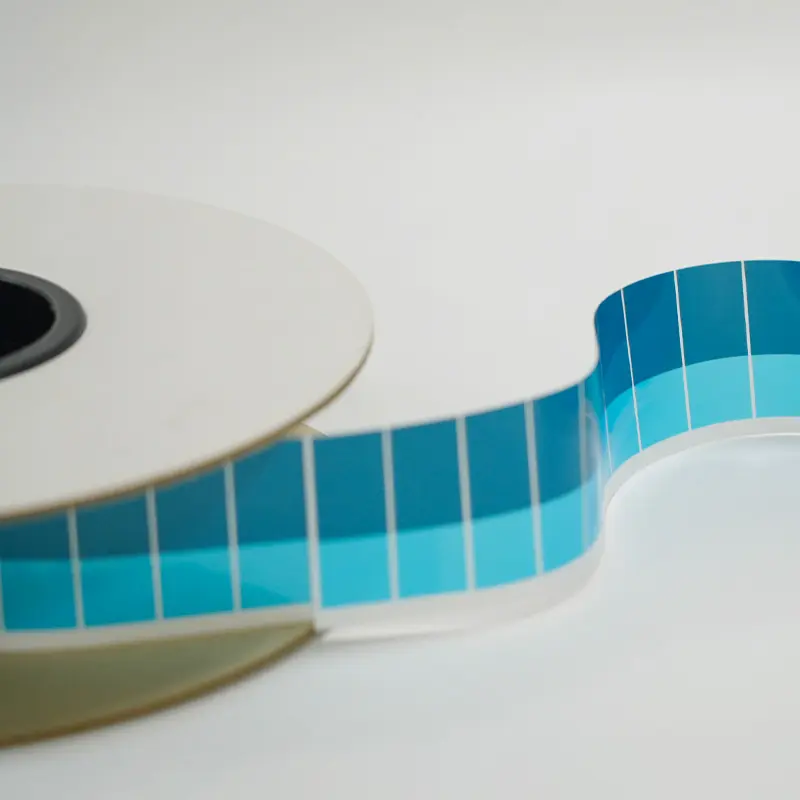

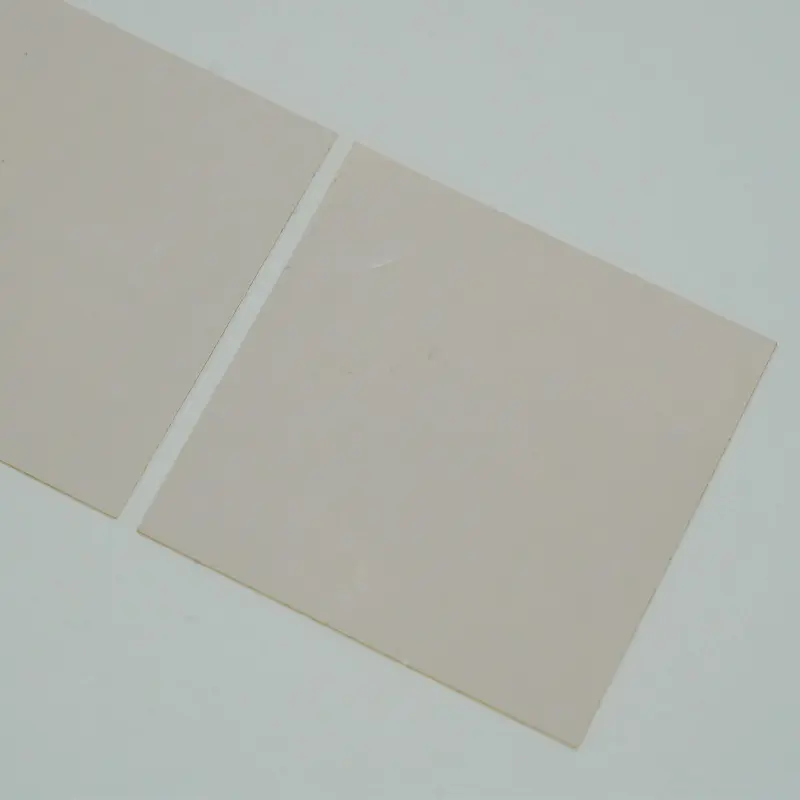
PCM Insulation Series

Typical Applications
-
 CPU, GPU and Other Chipsets
 -
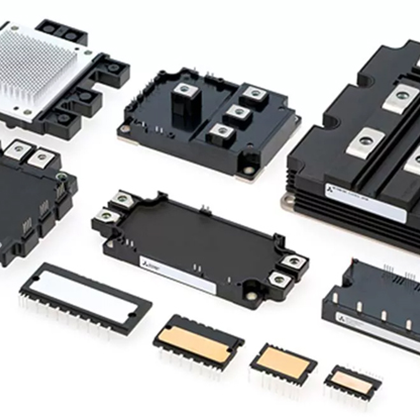 IGBT Module
 -
 Switches, Servers, Memory Devices
 -
 Automotive Electronics
 -
 Consumer Electronics
 -
 TV, Game Console, Etc
Specifications

Related Product

FAQ
Thermally Conductive Phase Change Material is a kind of high‑performance thermal interface material. With its low thermal resistance and high reliability characteristics, it is widely used in electronic devices that require efficient heat dissipation. Major application scenarios include:
Thermally Conductive Phase Change Materials for Notebook / Laptop Applications
Used between the CPU/GPU and the heat sink assembly. It is solid at room temperature for easy assembly; after the device heats up during operation, it changes to a paste phase, completely filling microscopic gaps and significantly reducing interfacial thermal resistance, ensuring stable operation of thin-and-light laptops under high load.
Thermally Conductive Phase Change Materials for Desktop Computer Applications
Suitable for heat dissipation of desktop processors (CPU), chipsets, and high-power discrete graphics cards (GPU). Compared with conventional thermal grease, the phase change material offers better long-term reliability, is less prone to pump-out or drying, and is ideal for servers or workstations that require long-term stable operation.
Thermally Conductive Phase Change Materials for Graphics Processors (GPU)
For high-heat-generating graphics processing chips, Thermally Conductive Phase Change Material effectively transfers heat to the heat sink, reducing hotspot risks. It is especially suitable for professional graphics cards and high-end gaming graphics cards.
Thermally Conductive Phase Change Materials for Memory Devices
Used between DDR memory modules, SSD controller chips, and heat sinks. The phase change material conforms to uneven chip surfaces, reduces local temperature differences, and helps memory/SSD maintain stable performance during high-frequency read/write operations.
Thermally Conductive Phase Change Materials for Consumer Electronics
Covers small portable devices such as smart phones, tablets, and hand-held gaming consoles. In these confined spaces, Thermally Conductive Phase Change Material enables efficient thermal conduction while meeting automated dispensing or pick-and-place process requirements, supporting ultra thin designs.
Thermally Conductive Phase Change Materials for Automotive Electronics
Used for heat dissipation in automotive-grade control units (ECU), invehicle infotainment systems, camera modules, and battery management systems (BMS). The product meets automotive requirements for temperature resistance, vibration resistance, and long service life, ensuring thermal management reliability in extreme environments (–40 °C to 125 °C).
Thermally Conductive Phase Change Materials for Home Entertainment Devices (TVs, Game Consoles, etc.)
For example, the mainboard chips of 4K/8K televisions, and the APU/memory/power management ICs of game consoles (such as PS5/Xbox). Thermally Conductive Phase Change Material effectively reduces overall device temperatures, preventing thermal throttling or stuttering due to overheating, thereby improving the user experience.
To ensure that Thermally Conductive Phase Change Materials maintain stable thermal conductivity and workability within its shelf life, please follow the storage requirements below:
Environmental conditions (applicable to all forms)
① Temperature: 15 °C to 35 °C
② Relative humidity: ≤ 65 % RH
③ Avoid direct sunlight, high temperature, high humidity, or corrosive gas environments.
Shelf life
12 months from the date of packaging. After the shelf life has expired, it is recommended to first verify the thermal performance and phase-change characteristics before further use; only continue use if the product passes verification.
The packaging of thermally conductive phase change materials shall comply with the following requirements:
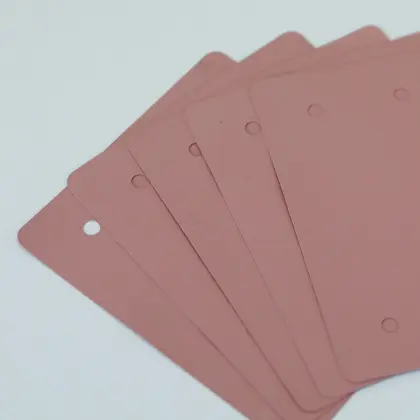
1. Sheet products: Keep sealed in the original packaging; avoid folding, heavy pressure, or contact with sharp objects to prevent mechanical damage or contamination.
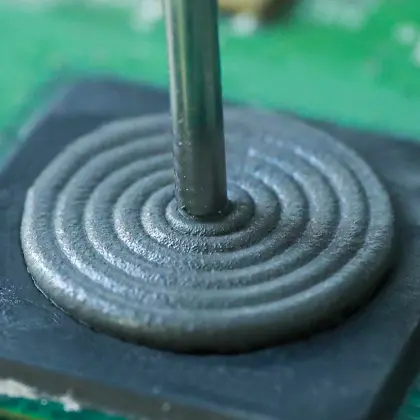
2. Paste products: Store sealed in the original container; after each use, tightly close the lid to prevent ingress of impurities or solvent evaporation that may change the consistency.
When taken out of the warehouse, if there is a large temperature difference with the environment, allow the sealed package to return to room temperature before opening to prevent condensation from affecting product performance.
You can choose sheet or paste products according to your application needs. Ordering methods are as follows:
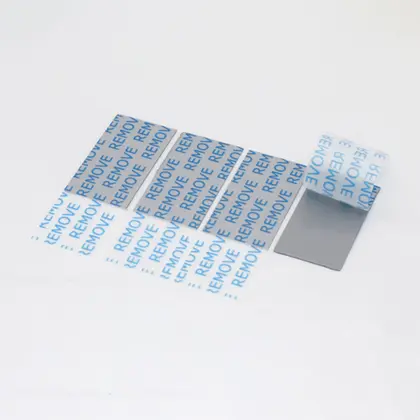
1. Sheet products: Sheet form, roll form and die-cut parts are available
Custom sized configurations and/or cut parts are available with dimensions less than 400*400mm
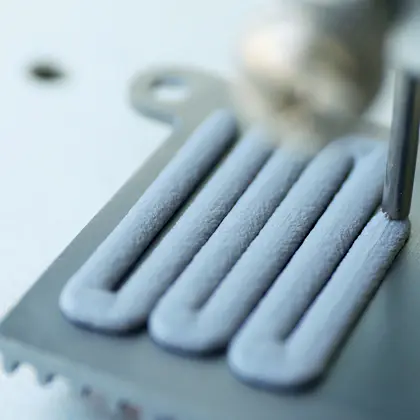
2. Paste / printable version: Paste product can be provided in 1kg cans
For more ordering information (such as minimum order quantity, lead time, sample requests, etc.), please contact our sales or technical support team.
① Do not eat
② Store away from children
③ Store away from combustion source
④ Please use in reference to MSDS
⑤ Keep the application interface clean

